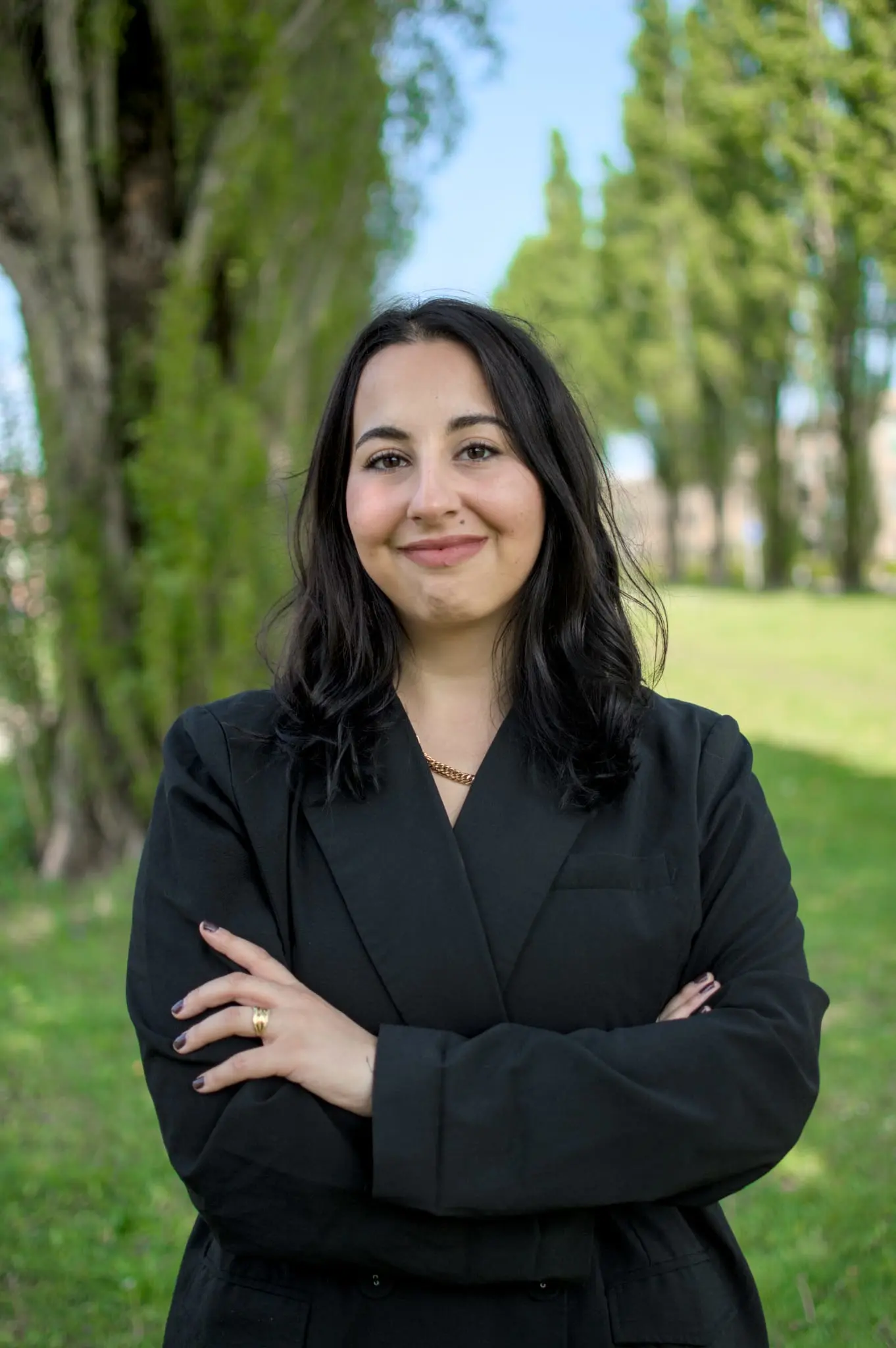
Mahaar Fattal: "I am not entirely Dutch and not entirely Syrian, and that is precisely my strength."
Share on social media:
Mahaar Fattal (28) grew up in Hilversum. Utrecht became her city. She is now the leader of the GroenLinks political party and in the 2026 municipal elections she is on the candidate list of GroenLinks-PvdA Utrecht at position 2. "Utrecht should be greener, fairer and for everyone."
Born in the Netherlands, yet often 'the other'
If you ask Mahaar who she is, she does not immediately start talking about politics. She starts with human beings. About her parents, who once fled Syria. About growing up between two worlds. And about the moment she noticed: participating in society also means letting your voice be heard.
Mahaar was born in the Netherlands, in the Crailo
At home there was a lot of Syria: speaking Arabic, Syrian food, music. Mahaar felt mostly Dutch, but others did not always see it that way.
Mahaar: "Then people say: how well can you speak Dutch. While I thought: I am Dutch, right?" It is an experience that many people with a migration or refugee background recognise: you belong, but you have to prove it over and over again.
Yet Mahaar also sees something beautiful in her background. "I got the best of both worlds," she says She mentions the Syrian way of living together: more focused on community and looking out for each other. She hopes the Netherlands would do more of the same.
From classroom discussions to municipal council
Politics was always present in Mahaar's home. Conversations about Syria, the Netherlands and justice were normal at home. "My parents taught me to always follow my own opinion," she says. Not to copy them, but to think for myself.
Even as a child, she was someone who loved to argue. Not to win, but in order to understand the other person better. That desire to make things fairer has remained. She felt GroenLinks was a logical choice: "A party that stands for equality, solidarity and the protection of human rights. Also the focus on a healthy, green living environment and fair opportunities for all."
Mahaar did an internship in the
She put herself forward as a candidate in Utrecht. "I thought: I will just give it a try." And it worked: she became council member. She has since become group chair.
What does a municipality actually do?
Mahaar thinks that many people do not know exactly what a municipality can and cannot do. And that makes sense: the government is big and sometimes complicated.
She explains it in simple terms: the municipality is often the first place where you, as a resident, interact with the government. For example: benefits, civic affairs, neighbourhood safety and local rules. But many financial matters and legislation are determined on a national level. "As a result, the space to really make free decisions in the municipality is sometimes smaller than people think," she explains.
At the same time, she sees Utrecht as a city with a clear,
Politics can also be a job in addition to your job
Many people think of 'politicians' as full-time
In fact, she thinks this is healthy. "When people are full-time politicians, they sometimes miss the connection with the outside world." By also working outside of politics, she continues to hear what is going on in society. For example, on the shop floor and in conversations with people who work every day for a good education and fair working conditions.
Mahaar's tips for newcomers who want to become politically active
Mahaar provides practical tips for people who want to participate (more) in politics:
"Start with what suits you. Take a look at
Kieskompas orStemWijzer . Pay attention not only to 'for or against,' but also to the explanation: which values suit you?""Go have a look and participate. Go to one of a party's meetings or get-togethers, or help campaign for once. Then you will see if you feel at home with the people."
"Build up a network. If you want to get on an electoral list later, it helps if people know you and have seen your efforts."
"Become a member. Not because everyone should choose the same party, but because change in society starts with people participating. The time is really now."
She says: "Waiting for others to solve problems does not work. If you want your voice, experience and concerns to count, politics - local, regional or national - is also a place for you. You do not have to speak perfect Dutch to participate. Your perspective and experience are especially valuable."