What post and documents do you need to keep in the Netherlands?
Share on social media:
In the Netherlands, you receive a lot of post. Sometimes it is on paper, sometimes digitally, for example via MijnOverheid, the Berichtenbox or email. The post may come from the municipality, the Dutch tax authorities, the IND, your health insurance provider or your landlord. You need to keep some of it. Other post requires a response or payment.
Always open your post and emails
In the Netherlands, you often receive important information by post. Sometimes you also receive the same information digitally. For example, via
So always open your post. A letter may state that you need to pay something, send something in, or reply by a certain date.
Always make sure to check:
Who sent the letter
Whether you need to do something
Whether you need to pay
The deadline for responding or making payment
Which
or number is included in the letter
Always keep important post
Some post needs to be kept safe. For example, letters from the IND, the municipality, the Dutch tax authorities, your health insurance provider, your landlord or your employer.
Be sure to keep any post that states:
That you have to pay for something
That you need to send something
That you must respond by a certain date
That a decision has been made
That you have an appointment
If there is a change in your income, rent, health insurance or right of residence
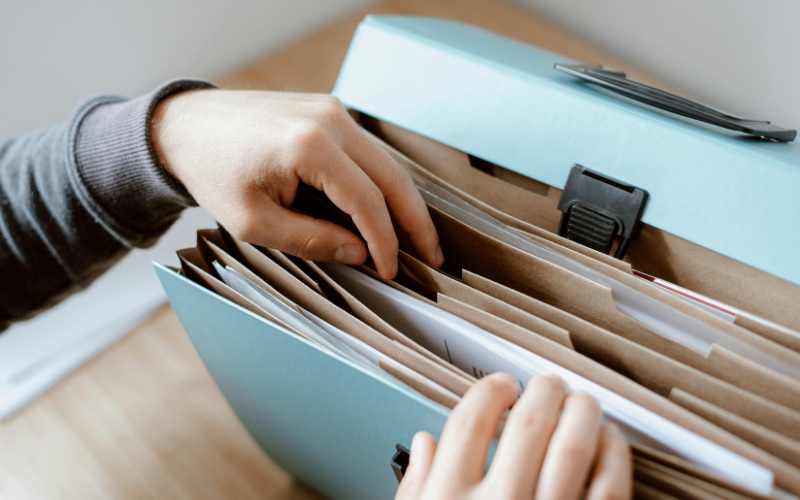
Have you received a letter in the post? Put important letters in a folder. You might also want to take a photo or scan them.
Have you received digital mail or emails? If so, create separate folders in your inbox or on your phone. For example: IND, municipality, tax, health insurance and housing.
If you organise your important post properly, you are less likely to misplace it. It will also be easier to find if you need to refer to it later.
If you have applied for asylum in the Netherlands
Make sure you keep all letters relating to your asylum application in a safe place. For example, letters from the IND, your lawyer, the COA or the court.
Make copies or take photos of any documents you submit to the IND. Also keep proof that you have submitted your documents.
Make sure you keep important documents safe
Always keep original documents such as your passport, residence permit, birth certificate, marriage certificate and diplomas in a safe place. Do not throw these documents away. You should also take a photo or scan them and keep them in a safe place.
If you have a residence permit
Do you have a residence permit? If so, be sure to keep any letters regarding:
Your residence document
Extension of your residence permit
Registration with the municipality
Work, benefits or income
Healthcare insurance
Rent or home
Tax and allowances
Are you applying for family reunification? Do not include original documents with your application; send copies instead. Wait until the IND asks for the original documents.
If your asylum application has been rejected
Has your asylum application been rejected? If so, make sure you keep all letters relating to your case. For example:
The IND's intention
The IND's decision
Letters from your lawyer
Letters from the court
Letters regarding
or A
Letters from the DT&V
These letters often contain important dates. Discuss them as soon as possible with your lawyer or an organisation that is helping you.
If you are from Ukraine
Are you from Ukraine and do you fall under the
You should usually keep financial documents for 5 years
As a resident of the Netherlands, you are not legally required to keep all your financial records. However, it is wise to keep important financial documents for 5 years. The
Annual statements of employment or
Important
Letters from the Dutch tax authorities
Letters from
Letters regarding housing benefit, healthcare benefit or
Letters regarding municipal taxes
Proof of payment
Letters regarding debts or
Letters from your
Are you an entrepreneur or do you run your own business? If so, different rules apply. However, there is a legal obligation to retain records for businesses and the self-employed.
You do not need to keep everything on paper
A lot of post is also sent digitally. Via MijnOverheid, you can receive post from the government digitally via the Berichtenbox. The IND also uses the Berichtenbox.
You need a DigiD to access MijnOverheid and many other government websites. Do you not have a DigiD yet?
So you do not need to keep every letter on paper. But do make sure you can easily find important letters. Download important letters as PDFs. Create clear folders on your phone or computer. For example:
IND
Municipality
The Dutch Tax Administration
Allowances
Healthcare insurance
Rent and housing
Work and income
What can you usually throw away?
You can usually throw post away if:
It is an advert
It is a duplicate
You have already securely saved the letter digitally
It is a reminder of an old appointment
It is a general leaflet containing no personal information
Please note: do not simply throw away letters containing your
Ask for help if you are unsure
Not sure whether a letter is important? Do not throw it away. Ask for help first.
You can ask for help from your contact person, the municipality,