Holidays in the Netherlands
Share on social media:
In the Netherlands, there are official holidays and traditional celebrations. Some days are national holidays by law. In this article you will find an overview of important holidays, what they mean and how they are celebrated.
Official national holidays in the Netherlands
New Year's Day (1 January)
New Year's Day is on 1 January, which is the first day of the new year. In the Netherlands, this is an official holiday. Many people are off work on this day.
On 31 December, the night before 1 January, people celebrate New Year's Eve. At midnight, people wish each other a happy new year and set off fireworks. As of 2026, fireworks are banned; in previous years, fireworks were part of the tradition.
On 1 January, the year often starts quietly. Some people participate in the New Year's dive into the sea. Many people also visit family or friends.
Good Friday (changing date in March or April)
Good Friday is the Friday before Easter. On this day, Christians commemorate the death of Jesus Christ.
It is an official Christian holiday in the Netherlands, but it is not a legal day off. That means not everyone is automatically off. Whether you are off depends on your
In some professions, such as education or government, many people do have the day off. For others, it is a regular working day.
Easter (changing date in March or April)
Easter is an important Christian festival. On this day, Christians celebrate the fact that Jesus Christ rose from the dead after his crucifixion on Good Friday. Easter also symbolises new life and the beginning of spring.
In the Netherlands, the First and Second Day of Easter are official holidays. Many people are then free from work on Easter Monday. The First Day of Easter always falls on a Sunday. The Second Day of Easter is an extra day off after Sunday. This tradition arose to give people more time to celebrate the festival.
People often celebrate Easter with family, during an Easter breakfast or Easter brunch. As a game, children often look for Easter eggs in the garden, which are small chocolate eggs with a coloured foil around them.
King's Day (27 April)
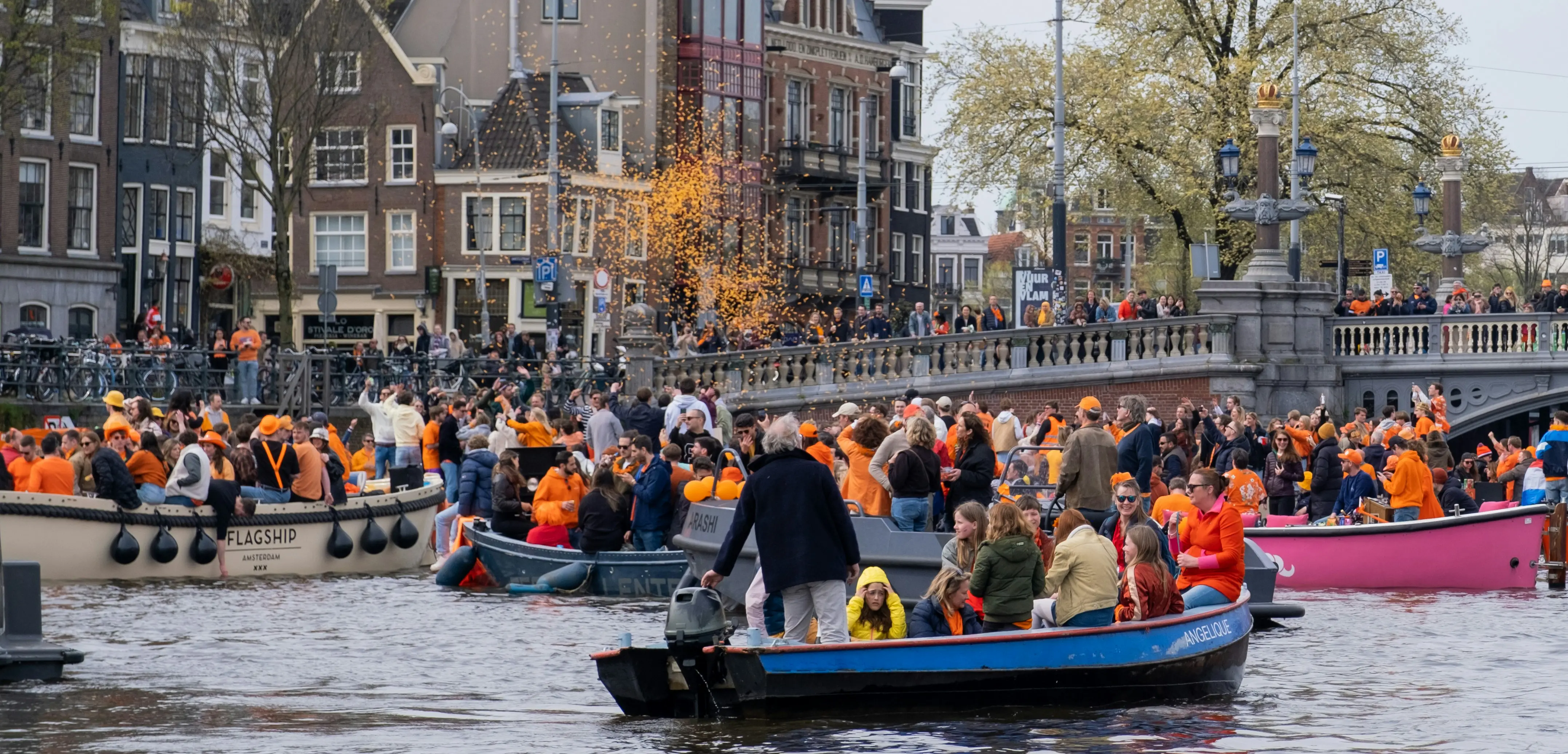
King's Day is the national holiday of the Netherlands. On 27 April, the country celebrates the birthday of King Willem-Alexander. The date of King's Day changes if there is another king or queen. It is always celebrated on that person's birthday, unless that date falls on a Sunday. Then it is moved one day.
On King's Day, many people wear orange clothing. In almost every city and village there is a flea market. People then sell second-hand items on the streets. There are also parties, music and activities for children. The king and his family visit 1 or 2 municipalities every year.
King's Day is an official holiday. Whether you are free from work depends on your CLA or employment contract. Most people are off on 27 April to celebrate this day.
Liberation Day (5 May) after the National Remembrance Day
Every year on 4 May at 20:00 is the National Remembrance Day. Then throughout the Netherlands we are silent for 2 minutes. We think of all the civilians and soldiers who have died in war since World War II.
The main commemoration is at the National Monument on Dam Square in Amsterdam.
On Refugeehelp, find more information about commemorating war victims on 4 May during Remembrance Day.
On 5 May, the Netherlands celebrates the liberation from German occupation in 1945. This marked the end of World War II in the Netherlands.
Liberation Day is a day to reflect on freedom, democracy and human rights. Throughout the country there are festivals, music performances and activities.
5 May is an official holiday. Yet it is not a mandatory day off for everyone. Whether you have the time off depends on your CLA or agreements with your employer. In many CLAs, employees are automatically off once every five years.
Ascension Day (changing date in May)
Ascension Day is a Christian holiday celebrated 40 days after Easter. On this day, Christians commemorate the fact that Jesus ascended to heaven.
Ascension Day always falls on a Thursday and is an official holiday in the Netherlands. Many people are off work then. As the day falls on a Thursday, some people also take the Friday off. This creates a long weekend.
Although not everyone celebrates the religious significance, Ascension Day is an established tradition in the Netherlands.
Pentecost (changing date in May or June)
Pentecost is a Christian festival celebrated 49 and 50 days after Easter. On this day, Christians commemorate the fact that the Holy Spirit came to the apostles. This is often seen as the beginning of the church.
In the Netherlands, Whit Sunday and Whit Monday are official holidays. Many people are off work then. Pentecost always falls on a Sunday and Monday.
Christmas (25 and 26 December)
Christmas is a Christian holiday that celebrates the birth of Jesus Christ.
In the Netherlands, Christmas Day and Boxing Day are official holidays. Many people are off work then. Christmas is time for family and togetherness.
Many people celebrate Christmas with family or friends. They eat Christmas dinner together, decorate a Christmas tree and sometimes give gifts. There are also Christmas markets and special church services.
Are you free on public holidays?
A national holiday does not automatically mean that you are free from work. Whether you have the day off depends on your collective labour agreement, employment contract or agreements with your employer.
If in doubt, check your contract or ask your supervisor. That way you will know exactly what you are entitled to.