Short phrases for expressing your opinion in Dutch
Share on social media:
In conversation, Dutch people often use short phrases to respond quickly. This is handy, but not always easy. In this article, you will learn phrases for expressing your opinion and responding clearly. You will learn how to say whether you agree, disagree or are still undecided.
Why are short sentences sometimes tricky?
In conversations in Dutch, you often hear short sentences. These might be responses or brief comments, for example. They are spoken quickly, but if you do not understand them, it is difficult to respond appropriately.
Some phrases have a figurative meaning. This means that the words mean something other than what is literally written. That is why it is useful to know what these phrases mean.
If you want to give your opinion: what can you say?
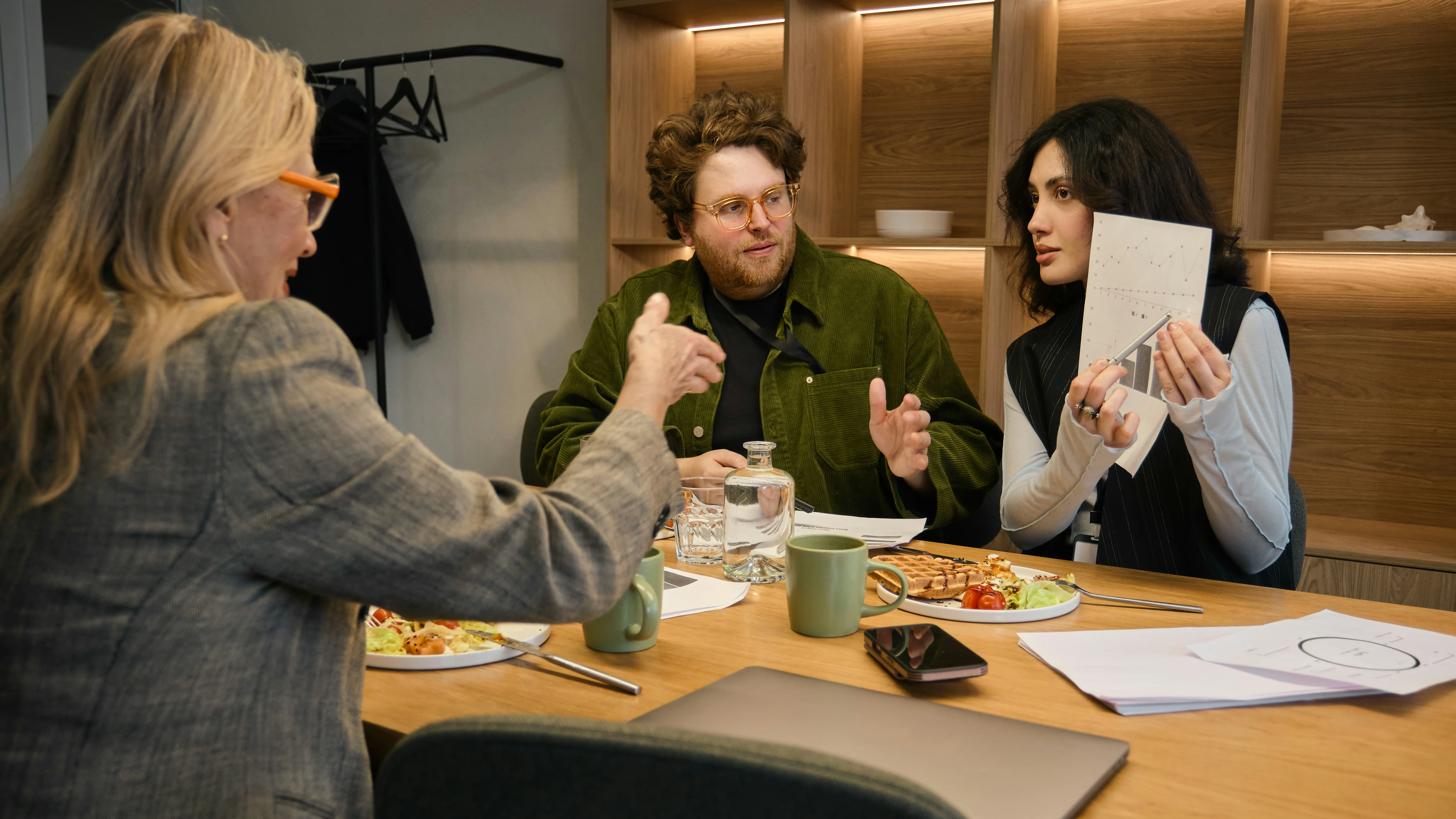
If you want to give your opinion, it is useful to know what to say. Sometimes you will want to respond to an idea or a situation, for example during a meeting or a discussion. This might be at work, at university or in everyday life. At times like these, short phrases come in handy. With these phrases, you can quickly and clearly say whether you agree, are unsure or disagree. This allows you to respond immediately, without a long explanation.
Short phrases to show that you agree with someone
‘Ik ben het ermee eens.’ (I agree)
Meaning: You agree with the other person. You say this when someone gives their opinion or makes a suggestion and you feel the same way.
Example: ‘Ik ben het ermee eens: we moeten eerder beginnen.’ (I agree: we need to start sooner.) ‘Ik ben het ermee eens: we gaan het anders doen!’ (I agree: let’s do things differently!)
‘Helemaal mee eens.’ (Completely agree)
Meaning: You agree completely. You say this when you are 100% behind the idea and want to confirm it very clearly.
Example: ‘Helemaal mee eens, laten we dit zo doen.’ (I completely agree; let’s do it this way.) ‘Helemaal mee eens, ik denk er hetzelfde over’ (I completely agree; I feel the same way)
‘Dat klopt.’ (That's right)
Meaning: You believe something to be true. You say this when someone says something and you confirm that it is correct.
Example: ‘Dat klopt, de afspraak is om 10 uur.’ (That's right, the appointment is at 10 o'clock.)
‘Goed punt.’ (Good point)
Meaning: You think someone has a strong argument. You say this when someone says something you had not thought of yourself, but which is important.
Example: ‘Goed punt, daar moeten we rekening mee houden.’ (Good point, we need to bear that in mind.)
‘Daar sta ik achter.’ (I approve of that)
Meaning: You support a plan or decision. You say this when you want to let someone know that you approve of the proposal and that you want to be part of it.
Example: ‘Daar sta ik achter. Laten we het zo aanpakken.’ (I approve of that. Let’s go ahead with that.)
‘Dat lijkt me een goed idee.’ (That sounds like a good idea)
Meaning: You think a suggestion is clever or practical. You say this when you are responding positively, but in a calm manner.
Example: ‘Dat lijkt me een goed idee: laten we eerst oefenen.’ (That sounds like a good idea: let’s practise first.)
‘Dat klinkt goed.’ (That sounds good)
Meaning: You think a plan or proposal is a good idea. You often use this when you think the proposal makes sense, but are not quite sure yet.
Example: ‘Dat klinkt goed. Wanneer beginnen we?’ (That sounds good. When shall we start?)
'Dat spreekt me aan.' (That appeals to me)
Meaning: You find something interesting, appealing or enjoyable. You say this when an idea, plan or offer appeals to you and you feel positive about it. It sounds a bit more polite than “dat vind ik leuk” (I like that).
Example: ‘Die cursus klinkt goed. Dat spreekt me aan, ik wil me graag aanmelden.’ (That course sounds good. That appeals to me; I would like to sign up.)
'Ik sta erop.' (I insist)
Meaning: You feel something is very important and you want it to happen. You use this when you want to make it clear that you will not change your mind. It sounds quite strong.
Example: ‘Ik sta erop dat we eerst alles controleren voordat we beginnen.’ (I insist that we check everything first before we start.)
‘Daar zit iets in.’ (There is something in that)
Meaning: You think there is some merit to the idea. You say this when you find it interesting, but are not entirely convinced yet.
Example: ‘Dat is een goed idee. Daar zit iets in, maar hoe gaan we dat precies regelen?’ (That’s a good idea. There’s something in that, but how exactly are we going to organise it?)
What do you say when you disagree with someone?
‘Ik ben het daar niet mee eens.’ (I do not agree with that)
Meaning: You have a different opinion. You express this politely when you disagree, without causing an argument.
Example: ‘Ik snap je punt, maar ik ben het daar niet mee eens. Ik denk dat we meer tijd nodig hebben.’ (I see your point, but I do not agree with tht. I think we need more time.)
‘Ik zie dat anders.’ (I see it differently)
Meaning: You see it differently. This often sounds a bit softer than ‘Ik ben het daar niet mee eens.’ It is a polite way of expressing a difference of opinion.
Example: ‘Ik zie dat anders. Eerst moeten we het goed voorbereiden.’ (I see it differently. First, we need to prepare properly.)
‘Daar twijfel ik over.’ (I am not so sure about that)
Meaning: You are not sure if it is correct, or you are not sure if something is a good idea. You use this if you still have questions or need more information.
Example: ‘Ik weet niet of we dat zo moeten doen. Daar twijfel ik over. Hebben we genoeg informatie?’ (I am not sure if that is the right way to go about it. I have my doubts. Do we have enough information?)
‘Dat vind ik niet logisch.’ (I do not think that makes sense)
Meaning: You do not understand the reason, or you find the plan unclear. You say this when you think something is not quite right.
Example: ‘Dat kost ons veel tijd. Dat vind ik niet logisch. Waarom doen we het op deze manier?’ (That takes us a lot of time. I do not think that makes sense. Why do we do it this way?)
‘Ik weet niet of dat werkt.’ (I do not know if that works)
Meaning: You are not sure whether the plan will work. You use this when you have doubts about the approach or the outcome.
Example: ‘Ik weet niet of dat werkt met zo weinig tijd.’ (I do not know if that will work with so little time.)
‘Dat slaat (helemaal) nergens op.’ (That makes absolutely no sense)
Meaning: Something is illogical or makes no sense at all. This is a strong statement. You use it when you feel that an idea really does not make sense.
Example: ‘Hij zegt dat je nooit hoeft te oefenen om te kunnen fietsen. Dat slaat nergens op.’ (He says you never need to practise to be able to ride a bike. That does not make any sense.)
‘Dat kan ik niet geloven.’ (I cannot believe that)
Meaning: You find something very hard to believe. You use this when something sounds strange or when you think it is not true.
Example: ‘Ze zegt dat ze nooit slaapt. Dat kan ik niet geloven.’ (She says she never sleeps. I cannot believe that.)
‘Daar ga ik niet in mee.’ of 'Daar kan ik niet in meegaan' (I do not/cannot going along with that)
Meaning: You are not going along with a plan or idea. You say this when you want to say a clear “no”, for example because you do not agree with it or because it is not allowed.
Example: ‘Als jij wilt liegen, dan ga ik daar niet in mee.’ (If you want to lie, I will not go along with it.)
‘Laten we het anders doen.’ (Let’s do it differently)
Meaning: You are suggesting a different approach. You use this when you have a better idea or when you think it will not work that way.
Example: ‘Laten we het anders doen: eerst rustig plannen en daarna starten.’ (Let’s do it differently: let’s plan it properly first, and then get started.)
‘Ik ben het deels met je eens.’ (I partially agree with you)
Meaning: You agree to some extent, but not entirely. You use this when you agree with some points but also have reservations.
Example: ‘Ik ben het deels met je eens, maar we hebben nog meer informatie nodig.’ (I partially agree with you, but we need more information.)
'Dat is onzin!' of 'Ik vind dat onzin!' (That is nonsense! or I think that is nonsense!)
Meaning: You think something is wrong or untrue. You use this when you strongly disagree. It sounds quite harsh.
Example: 'Hij zegt dat je nooit Nederlands hoeft te oefenen. Dat is onzin!' (He says you never need to practise Dutch. That is nonsense!)
Example: 'Je zegt dat regels niet belangrijk zijn? Ik vind dat onzin!' (You say rules are not important? I think that is nonsense!)
Practical tips if you want to learn the language
Would you like to understand Dutch better? Then learn
Do you not understand a sentence? Then ask. For example, ask if someone means it literally or figuratively. Also pay close attention to the situation and context. This is especially important with irony.
Keep practising and do not be afraid to make mistakes. This way you will learn more step by step. Also check out RefugeeHelp to learn more about the Dutch language and culture.