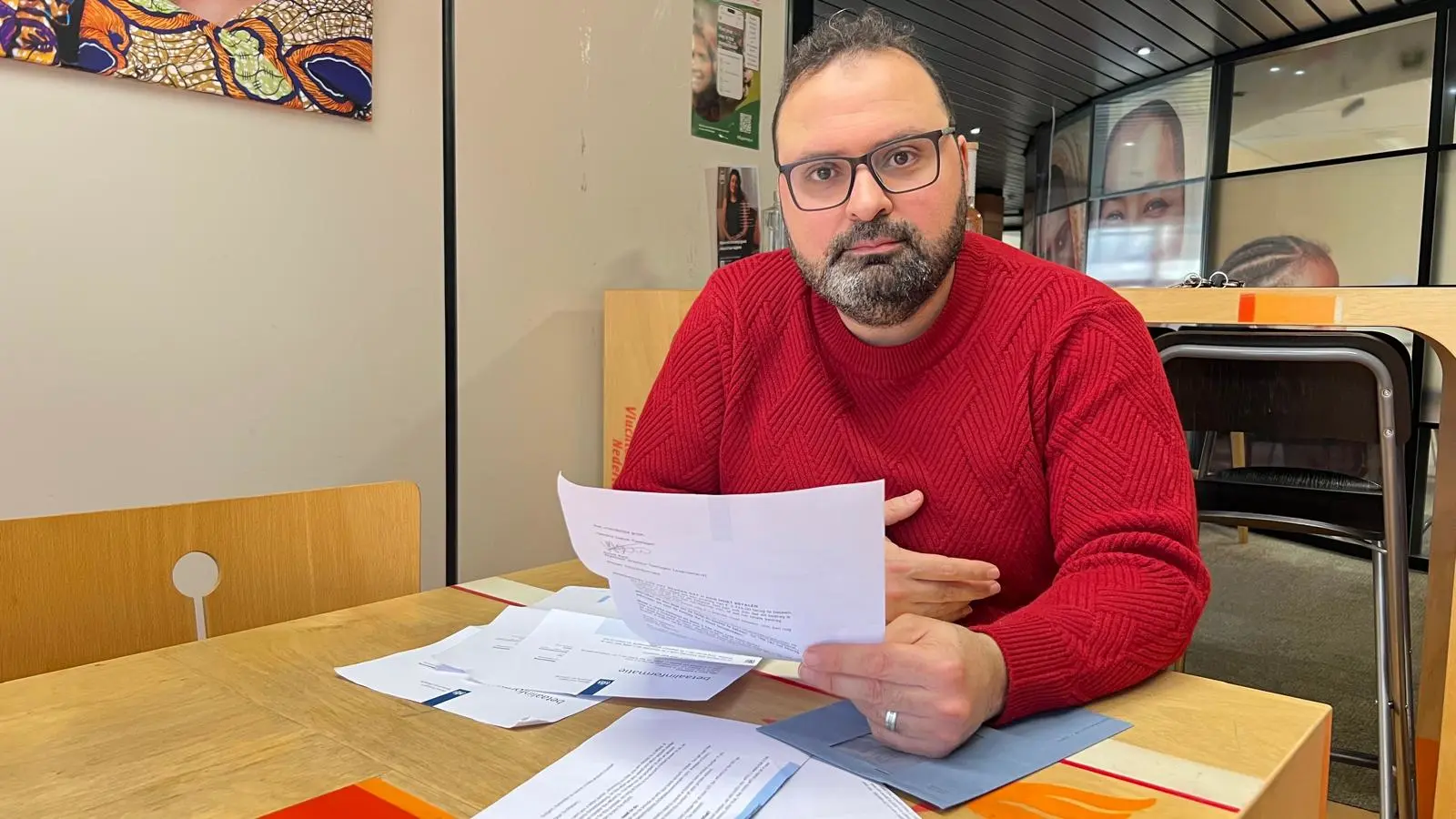
Mohammed (45): "I did not know what happened to me, I almost had a nervous breakdown"
Share on social media:
More and more people in the Netherlands are experiencing money problems because they have to pay back allowances, research shows. Mohammed (45) also experienced this: "Nobody explained to me what I had to do when I started working."
A new start in the Netherlands
After getting housing in the municipality of Hoorn, Mohammed, like many other refugees, wanted to integrate as quickly as possible. He learned Dutch and tried to build his life together with his wife and children. After moving there, he received welfare benefits from the municipality. He also received a loan to buy furniture for his house.
The municipality worked with the organisation
Working without proper supervision
After a year and a half, Mohammed was offered a job as a journalist. The salary was low and his years of experience did not count. Mohammed: "My work experience from abroad was not taken seriously. I did not dare say no. I come from a culture where you do not contradict authority."
When he started working, Mohammed continued to receive allowances. He thought this was allowed because his income was low. "No one explained to me what I had to do when I started working," he says. "I was not given any advice or guidance."
Unexpected debts
A year later, Mohammed received a letter from the municipality. He had to repay the loan for his home in full. Normally this loan is waived after 3 years, but because he was no longer receiving benefits, this did not apply to him.
Shortly after this, he also received letters from the Dutch tax authorities. He also had to pay back allowances. "This was a huge shock," Mohammed says. "I did not know what happened to me, I almost had a nervous breakdown."
Many Dutch citizens have problems with allowances
This problem with allowances is increasingly common. The number of households with long-term allowance debts has increased nearly three times since the COVID-19 era. In the past year, the
According to the 'Dienst Toeslagen', this is mainly due to the complicated benefits system. During COVID-19, the government temporarily stopped claiming money back. As a result, debts remained outstanding and people are only now receiving notices about them.
Living with debts
Mohammed made a plan to get out of debt. For three years, he has been paying money back every month. "I have to keep paying until 2027," he says. "Fortunately, my wife works and helps me. Without her it would not have been possible."
For Mohammed, everything started without him realising. A combination of lack of information, pressure to work and a complicated system got him into financial trouble.
Now he can see the problems clearly. "You have to take your time," Mohammed says. "Make sure you know your rights and obligations and always keep checking what you are getting. I hope no one goes through what I went through."
What can you do if you have the same problems?
Are you having problems with allowances or debts? Then ask for help in time. You can contact your municipality, for example debt counselling or the social neighbourhood team. There are also organisations that can support you.