Source: VluchtelingenWerk Nederland/Goedele Monnens
Article

This is what you need to arrange if you have been given a house by the municipality

Last updated: 12/11/2024, 12:42

When you are assigned a house, there are many things you need to take care of. For example, you have to take out an energy contract and pass on your change of address. On this page you will find a list of all the things you need to do.

You can probably borrow money from the municipality to furnish your home

Most municipalities allow you to get a loan to furnish your 1st home. This is called a furnishing loan. This loan helps you buy furniture and other important items. The amount of the furnishing loan varies by municipality. The furnishing loan is usually a loan, which means that you will eventually have to pay back the money you borrow to the municipality.

In some municipalities there are also options where you do not have to pay the money back, depending on your situation. Contact your municipality to ask what the options are and how to apply.

You arrange the provisions and finances of your home

You arrange the following things in terms of money and provisions in your home:

You must pay the rent of a rental property in advance each month. In other words, you pay before the first day of the month. Some municipalities allow you to borrow the money for your first month's rent.

If you have an independent rental property, you sometimes receive a rent allowance. This is an amount of money you get from the government that you can use to pay part of the rent. Self-contained housing is housing with its own entrance and its own kitchen and toilet.

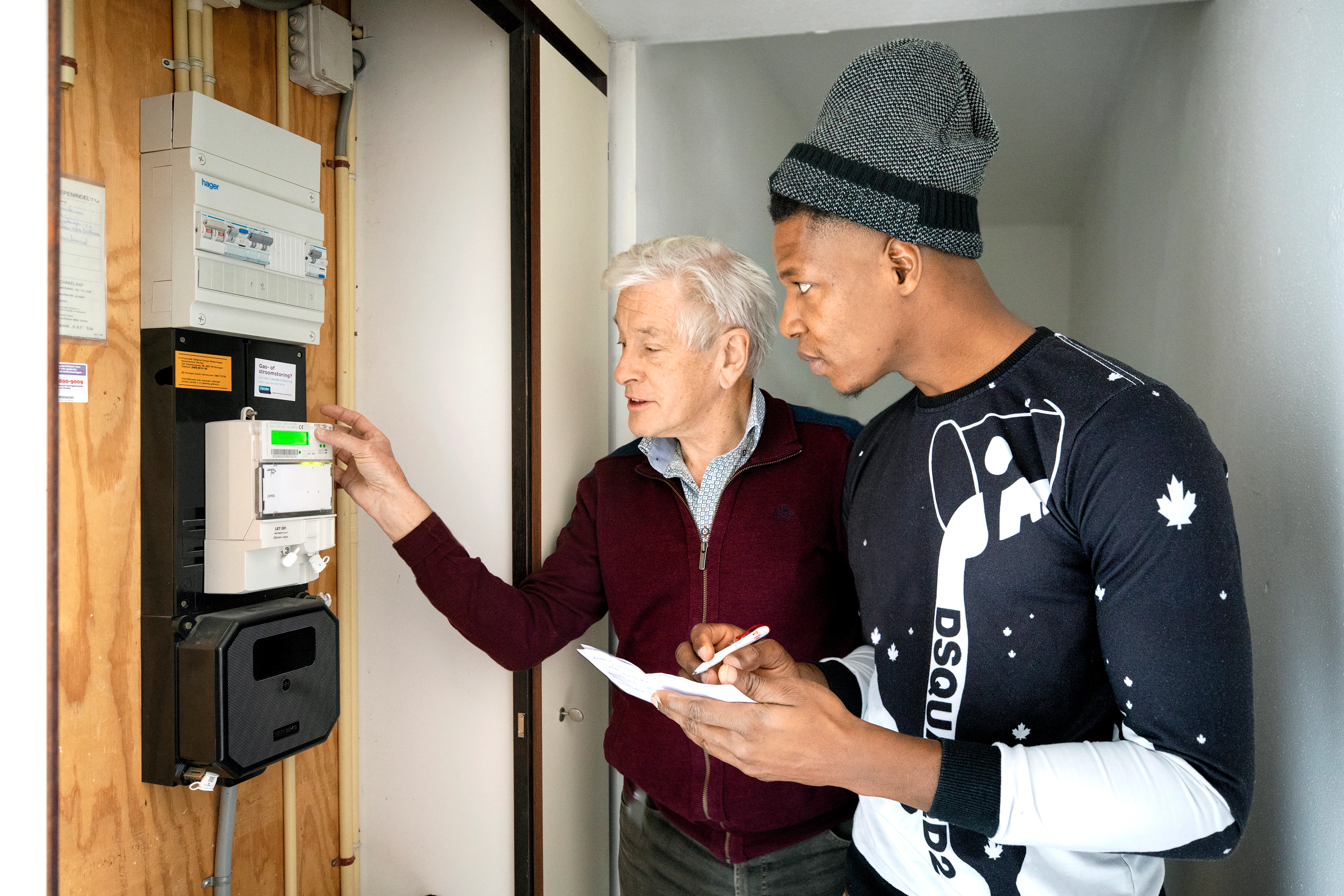
Sometimes the cost of electricity and gas is already included in the rent. In most cases, this is not the case. Then you have to enter into your own contract for electricity and gas with an energy supplier. When taking out your energy contract for electricity and/or gas, you can choose from two types of contracts: a fixed contract and a variable contract.

Fixed contract

A fixed energy contract is an agreement with an energy supplier for a fixed period of time. It is usually a contract for 1 to 5 years. As a result, you pay a fixed amount every month for as long as the contract runs: the same price for electricity and/or gas. If you terminate this agreement before the end date of the contract, you pay a termination fee to the energy supplier.

Please note: Since Russia's invasion of Ukraine, gas prices have skyrocketed. Therefore, it is difficult to secure a permanent contract for a longer period of time. 

Advantages and disadvantages of a permanent contract:

  • Throughout the contract, you pay the same price for your energy use each month.

  • If energy prices rise, this does not affect the price you pay.

  • However, if prices go down, your bill will not go down either.

  • You must pay a termination penalty if you switch to another energy supplier before the end of your contract.

Variable contract

A variable energy contract is an open-ended contract. This means you can cancel the contract every month. The rate with a variable contract is a fixed rate for six months. The supplier usually sets the rates on 1 January and 1 July.

Please note: Since Russia's invasion of Ukraine, gas prices have skyrocketed and more and more suppliers are changing their variable rates more frequently. Sometimes they change rates every month.

Advantages and disadvantages of a variable contract:

  • The contract can be terminated on a monthly basis.

  • As your rates are usually allowed to change every six months, you can take advantage of price decreases, but the supplier is not obligated to do so.

  • When prices rise, you immediately pay more, too.

On this website of Independer you can compare energy suppliers

.

Sometimes the cost of water is already included in the rent. However, in most cases, you must conclude a contract with a water supplier yourself. You cannot choose your own water supplier. You must sign up with the supplier that provides water at your address. It is best to sign up before you get the key to your new home.

On the website of the Association of Water Companies in the Netherlands, you can see which water company delivers to your address.

Here you can find which supplier supplies water to your address.

If you rent a home, it is wise to purchase contents insurance. With this insurance, all the things in your home that you can take with you are insured. In other words, everything that is not fixed.

For example, your furniture, technical equipment, but also your curtains and jewellery. If you are insured, you will get money from your contents insurance if there is a fire, storm, burglary or flood, for example.

The Independer website allows you to compare insurers.

Compare insurers with each other here.

Sometimes the cost of internet is already included in the rent. However, in most cases, you have to sign your own contract with a supplier. If you want to purchase contract for both internet and television, it is often cheaper to do so with the same supplier.

It is also possible to purchase internet or television separately. You can easily compare the range of suppliers on Independer's website.

Compare television and internet providers with each other here.

Municipalities levy a number of municipal taxes. The taxes may vary from one municipality to another. Examples of municipal taxes include waste disposal charges

andsewerage tax. You also have to pay water taxes.

Please note: if you have little money, you can ask the municipality whether you have to pay it. This is called applying for a waiver.


Did this information help you?


The information that you find on this platform comes from the human rights organisation VluchtelingenWerk Nederland (VWN), in cooperation with its partners.
In cooperation with Contentful