
William of Orange: the Father of the Nation
Share on social media:
William of Orange is regarded as the 'Vader des Vaderlands' (Father of the Nation) and played a key role in the founding of the Netherlands. His struggle against Spain marked the beginning of an independent and sovereign Netherlands. Read here to find out who he was.
Events and background in the life of William of Orange
William of Orange was born on 24 April 1533 at Dillenburg Castle, in an area that now belongs to Germany. His real name was Wilhelm. In Dutch, we call him Willem. He came from a
In 1544, when he was 11 years old, William inherited the
William was raised as a Catholic at
Having been raised as a Protestant at home and as a Catholic at court, he developed a tolerant attitude and believed that people should be able to accept different faiths.
At court, William learnt a great deal about politics and governance. He also built up a large network. Later, Willem became an important
Conflict with Spain
In the 16th century, the Netherlands were part of the empire of the Spanish King Philip II. Philip wanted more power and control. He also wanted everyone to remain Catholic. Protestants were severely persecuted. This led to widespread anger and unrest in the Netherlands.
From 1555 onwards, William of Orange was appointed to increasingly senior positions. He became stadtholder of Holland, Zeeland and Utrecht, amongst others. Initially, he worked alongside Philip II, but their relationship deteriorated over time. William felt that Philip was too harsh and that the traditional rights and freedoms of the provinces were under threat. William therefore became a key spokesperson for the nobility who were protesting against Spanish policy.
William of Orange and the revolt
The conflict with Spain is known as the 'Dutch Revolt' or the 'Eighty Years' War'. William of Orange became one of the most important leaders. At first, he tried to resolve the issues without resorting to war, but tensions continued to rise.
William preferred cooperation to a war over religion. He tried to accommodate both Catholics and Protestants.
He also wanted the provinces to fight together against Spain. That is why he helped to arrange key agreements. This cooperation is often seen as an important step towards the formation of the Netherlands.
William the Silent
William of Orange's nickname was 'William the Silent'. This does not mean that he was always quiet. The nickname refers to the way he dealt with difficult situations. William did not always say straight away what he really thought. He often kept his plans secret, especially from the Spanish authorities. This enabled him to negotiate skilfully and conduct politics with caution.
William of Orange and Leiden
William of Orange is also significant to the city of Leiden. Leiden University was founded in 1575. According to the stories, the university's foundation was a reward for Leiden's courageous resistance against the Spanish during the occupation of the city. William of Orange played a key role in its establishment.
A reward on his head
In 1580, King Philip II declared William of Orange to be "in de ban" (outlawed). This meant that William was declared an outlaw: anyone was permitted to attack him. Philip even promised a reward to anyone who killed William.
On 10 July 1584, William of Orange was assassinated in Delft. After his death, the struggle continued. A few years later, the rebellious
That is why William of Orange is now regarded as one of the founding fathers of the Netherlands.
Willem's influence on the Netherlands today
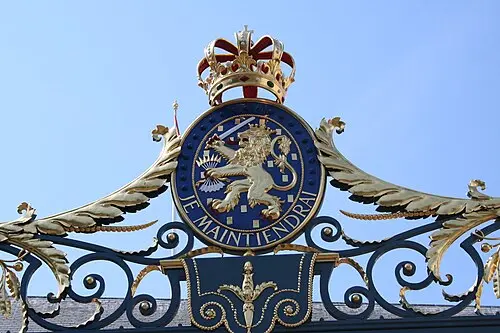
William of Orange had a profound influence on the Netherlands. One of his famous sayings was: 'Je maintiendrai' (French for 'I shall persevere' or 'I shall uphold'). This motto still features on the coat of arms of the Kingdom of the Netherlands.
The Dutch national anthem, the Wilhelmus, is also about William of Orange. The Wilhelmus has been the official national anthem of the Netherlands since 1932. In The Hague, there is also a statue of William of Orange on the Plein and at Noordeinde.
The colour orange also comes from him. William held the title of Prince of Orange. That is why Dutch sports teams often wear orange kit, especially in international matches.
William of Orange is important because his name appears in many places across the Netherlands: in history books, museums, street names and at school. If you want to understand the Dutch Revolt against Spain and the origins of the Netherlands, William of Orange is an important figure to know about.