How do you use expressions relating to the sea, sailing and ships in Dutch?
Share on social media:
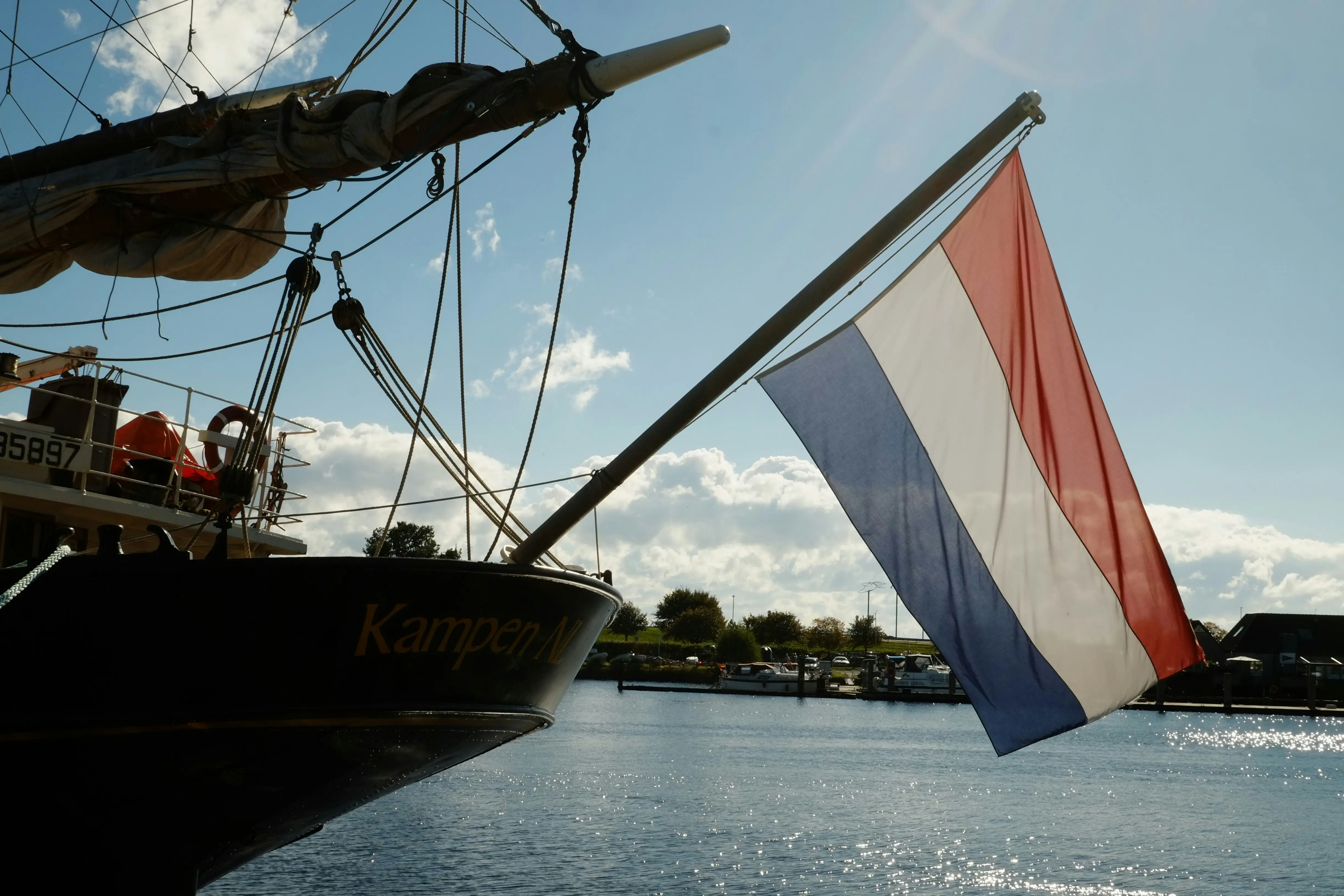
The Dutch language has many expressions. The Netherlands is a coastal country with a long history of seafaring. Consequently, the Dutch language contains many expressions relating to sailing and ships. In this article, you can read more about these expressions.
The Dutch language is rich in expressions relating to the sea, sailing and ships
The Netherlands has a long history of waterways and shipping. That is why there are many Dutch expressions relating to sailing, ships and the sea. During the
At that time, many people worked on ships, for example as sailors, traders or dockworkers. Within the Netherlands, too, transport often took place by water, for example via rivers and canals.
Life at sea was hard and dangerous. You had to work well together and make quick decisions. That is why sayings and phrases emerged back then that get straight to the point. The Dutch still use expressions from that era when talking about risks, teamwork and difficult situations. Below, we explain a number of these expressions.
Expressions about the sea, sailing and ships
'Met iemand in zee gaan' (To go into business with someone)
This expression means that you are going to work with someone or make an arrangement with them. You are choosing to do something together, for example at work or in business.
Example: 'Na een goed gesprek besloot het bedrijf met die nieuwe persoon in zee te gaan.' (Following a productive discussion, the company decided to go into business with that new person.)
'Water naar de zee dragen' (To carry water to the sea)
This expression means that you are doing something pointless, because it is not necessary. You are adding something where there is already plenty.
Example: 'Nog meer uitleg geven aan die expert is als water naar de zee dragen, want hij weet er al alles van.' (Explaining it further to that expert would be like carrying water to the sea because he already knows all about it.)
'Recht door zee zijn' (To act in a straightforward manner)
This expression means that someone is honest, straightforward and direct. They simply say what they think.
Example: 'Hij is altijd recht door zee, dus je weet meteen wat hij van iets vindt.' (He is always straight to the point, so you know straight away what he thinks of something.)
'Over stag gaan' (To change your mind)
This expression means that someone changes their mind. At first, someone does not want to do something, but later they agree or go along with it after all.
Example: ‘Eerst wilde hij niet mee op vakantie, maar later ging hij toch over stag.’ (At first he did not want to come on holiday, but later he changed his mind.)
‘Kantje boord' (A close call)
This expression means that something just about succeeds or just about goes well.
Example: ‘I had to run for the train, but I made it. That was a close call!’
'Alle hens aan dek' (All hands on deck)
‘Alle hens aan dek’ is a nautical expression meaning that everyone must lend a hand immediately, often in an emergency or in bad weather. The word ‘hens’ comes from the English word ‘hands’ and refers to sailors or the crew. The ‘dek’ is the floor of a ship. The expression shows that everyone is needed to work hard together, for example during a storm or when there is danger at sea.
Example: ‘Toen de zaal ineens vol gasten stond en er nog veel geregeld moest worden, was het alle hens aan dek in het restaurant.’ (When the dining room suddenly filled up with guests and there was still a lot to organise, it was all hands on deck in the restaurant.)
'De beste stuurlui staan aan wal' (The best officers are on dry land)
This expression means that people are often quick to criticise or offer advice, whilst not getting involved themselves.
Example: ‘Tijdens de voetbalwedstrijd riepen de supporters vanaf de tribune wat de trainer anders moest doen. De beste stuurlui staan aan wal.’ (During the football match, the supporters in the stands were shouting instructions at the manager on what he should do differently. The best officers are on dry land.)
'Iemand zit in mijn vaarwater' (Someone is stepping on my toes)
This expression means that someone is getting in your way or causing you trouble. It can also mean that someone is interfering with something you are doing.
Example: ‘Die nieuwe collega zit in mijn vaarwater, hij bemoeit zich overal mee.’ (That new colleague is stepping on my toes; he sticks his nose into everything.)
'Het loopt de spuigaten uit' (It is getting completely out of hand.)
This expression means that someone is losing control, or that a situation is escalating.
Example: ‘Eerst had ik mijn financiële problemen nog onder controle, maar nu heb ik veel schulden. Het loopt de spuigaten uit.’ (At first, I still had my financial problems under control, but now I am heavily in debt. It is getting completely out of hand.)
Note. Scuppers are the openings on the side of the ship. They are designed to allow the large amount of water that runs back onto the deck during rain or a storm to flow back into the sea as quickly as possible.
'De wind van voren krijgen' (To get a telling-off)
This expression means that someone is given a stern telling-off or a lot of criticism. This usually happens when someone has done something wrong.
Example: ‘Toen hij voor de 3e keer te laat op zijn werk kwam, kreeg hij van zijn baas flink de wind van voren.’ (When he turned up late for work for the third time, his boss gave him a proper telling-off.)
'Het roer omgooien' (To change direction)
This expression means that someone is making a major change in their life, work or plans. They are consciously choosing a different direction because they have to.
Example: 'Na jaren op kantoor te hebben gewerkt, gooide ze het roer om en begon ze haar eigen bakkerij.' (After years of working in an office, she changed direction and started her own bakery.)
'Overstuur raken/zijn' (To be distraught)
This expression means that someone is very emotional, sad or panicking. They are no longer calm and may, for example, be crying, shaking or unable to think clearly.
Example: 'Toen ze hoorde dat haar broertje een ongeluk had gehad, raakte ze helemaal overstuur en begon ze meteen te huilen.' (When she heard that her little brother had had an accident, she was completely distraught and immediately started crying.)
'Alle zeilen bijzetten' (To pull out at the stops)
This expression means that you do everything in your power to make something succeed. You devote all your time, energy and effort to it, because it is important that it succeeds.
Example: 'In de laatste week voor het examen moest ik alle zeilen bijzetten om alles nog op tijd te leren.' (In the final week before the exam, I had to pull out all the stops to get everything learnt in time.)
'Ergens mee opgescheept zitten' (To be stuck with something)
This expression means that you have something or someone you are not happy with and find it hard to get rid of. It often refers to a task, a person or a situation that you did not really want in the first place.
Example: 'Omdat niemand anders wilde helpen, zat zij ineens met het hele project opgescheept.' (Since no one else was willing to help, she suddenly found herself stuck with the whole project.)
'Onder zeil moeten' (To turn in)
This expression means that someone is tired and needs to go to bed to sleep. It is a nautical expression and means that a ship is sailing or setting sail with its sails hoisted.
Example: 'Na die lange dag op school en voetbaltraining moest ik echt vroeg onder zeil.' (After that long day at school and football training, I really had to turn in early.)
'Schoon schip maken' (To come clean)
This expression means that you are resolving problems, mistakes or old arguments and want to make a fresh start. You want to be honest and ensure that everything is clear and calm again.
Example: 'Na weken van ruzie besloten ze eindelijk schoon schip te maken en eerlijk met elkaar te praten.' (After weeks of arguing, they finally decided to come clean and have an honest chat.)
'Aan lagerwal raken' (To hit rock bottom)
This expression means that someone’s situation is getting worse and worse. It often refers to financial difficulties, problems at work or other difficult situations in life.
Example: 'Na jaren van slechte keuzes en geldproblemen raakte hij aan lagerwal en kon hij zijn huur niet meer betalen.' (After years of poor choices and financial difficulties, he hit rock bottom and could no longer afford his rent.)
'Iemand de wind uit de zeilen nemen' (To take the wind out of someone's sails)
This expression means that you undermine someone’s position in a conversation or situation.
Example: 'Hij wilde klagen dat niemand hem had geholpen, maar toen zijn collega liet zien hoeveel werk zij al had gedaan, nam zij hem meteen de wind uit de zeilen.' (He wanted to complain that nobody had helped him, but when his colleague showed him how much work she had already done, she immediately took the wind out of his sails.)
'Driemaal is scheepsrecht' (Third time lucky)
This expression means that something will work out on the third attempt. If something has not worked out twice, you hope it will go well the third time.
Example: 'De eerste 2 keer zakte hij voor zijn rijexamen, maar de 3e keer slaagde hij. Driemaal is scheepsrecht.' (He failed his driving test the first two times, but passed on the 3rd attempt. Third time lucky.)
'Iemand een hart onder de riem steken' (To give someone a word of encouragement)
This expression means giving someone support, encouragement or comfort. You say or do something that makes that person feel better, stronger or calmer.
Example: 'Vlak voor haar moeilijke gesprek met haar baas, stak haar vriendin haar een hart onder de riem door te zeggen dat ze goed voorbereid was en het zeker kon.' (Just before her difficult meeting with her boss, her friend gave her a pep talk, telling her she was well prepared and could definitely do it.)
'Het voortouw nemen' (To take the lead)
This expression means that someone takes the initiative and takes the lead. That person does not sit back and wait, but ensures that others get involved too.
Example: 'During the group work, Fatima took the lead: she divided up the tasks and made sure everyone got to work.'
'Stille wateren hebben diepe gronden' (Still waters run deep)
This expression means that quiet and reserved people often know, feel or think more than you might initially realise. Someone might not say much, but they can still be intelligent, sensitive or special.
Example: 'In de klas zei Sara bijna nooit iets, maar toen ze haar presentatie gaf, was iedereen onder de indruk. Stille wateren hebben diepe gronden.' (Sara hardly ever said a word in class, but when she gave her presentation, everyone was impressed. Still waters run deep.)
'Pompen of verzuipen' (Make or break)
This expression means that you have to work quickly and hard, otherwise things will go wrong. There is no time to wait.
Example: 'Een uur voor het feest viel de stroom uit en moest alles opnieuw geregeld worden. Het was echt pompen of verzuipen om alles nog op tijd klaar te krijgen.' (An hour before the party, the power went out and we had to organise everything all over again. It was really make or break to get everything ready in time.)
'Een kop/hoofd als een boei hebben' (To have a head like a buoy)
This expression means that someone has a very red face.
Example: 'Na het rennen door de regen kwam hij binnen met een hoofd als een boei en moest hij eerst even bijkomen.' (After running through the rain, he came in soaking wet and needed a moment to catch his breath.)
'Spijkers op laag water zoeken' (To nitpick)
This expression means that someone is making a fuss over small and trivial matters. You use this expression when someone is turning a minor issue into a major problem.
Example: 'The text was almost perfect, but he kept harping on about a single comma and a minor typo. He was really nitpicking.'
Practical tips if you want to learn the language
Want to understand the Dutch language better? Then also learn expressions and proverbs. These are very important in the Netherlands and are often used in conversations.
If you do not understand a phrase, ask for clarification. For example, ask whether someone means it literally or figuratively. Also pay attention to the situation and context.
Keep practising and do not be afraid to make mistakes. This way you will learn more step by step. Also check out our RefugeeHelp platform to learn more about the Dutch language and culture.