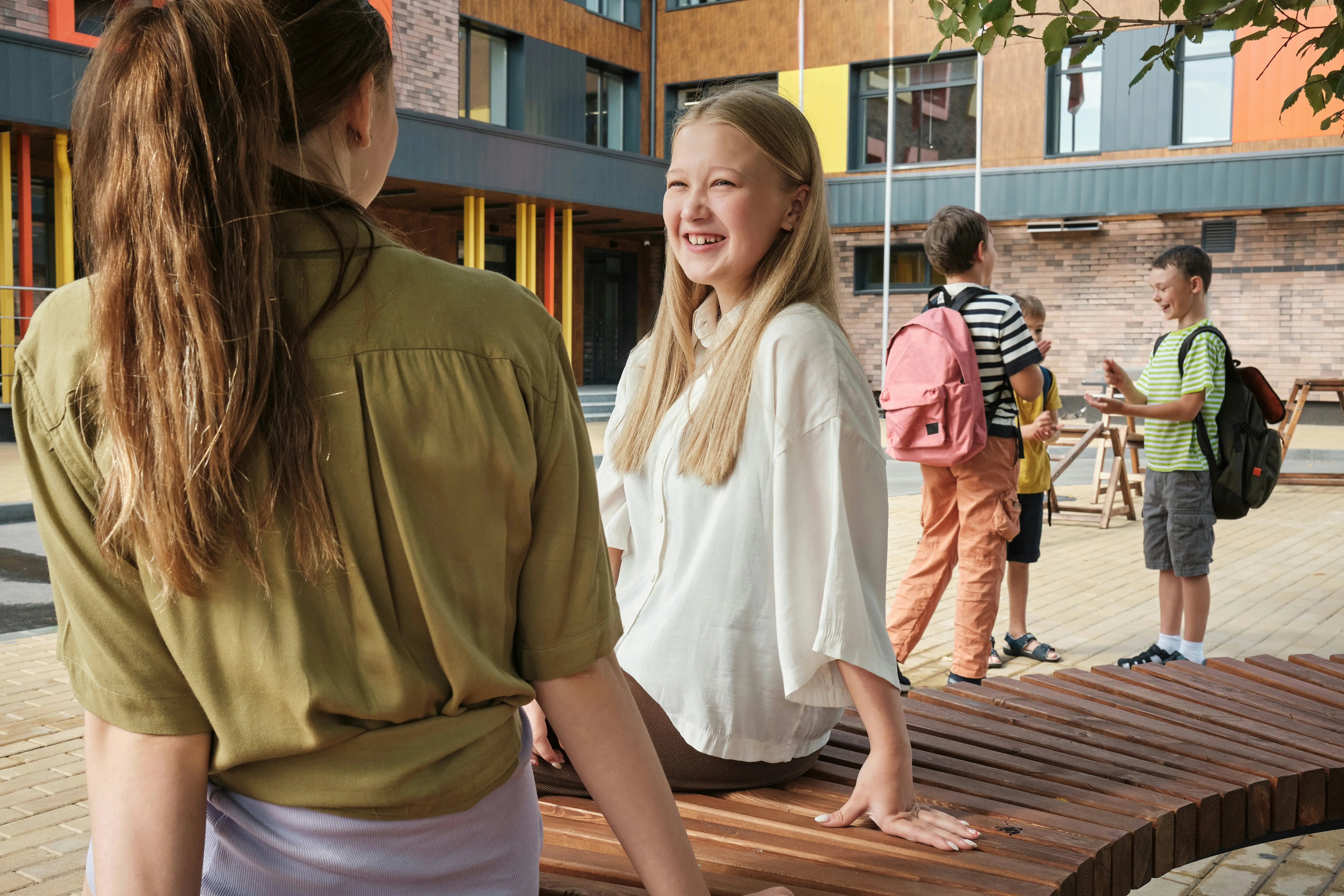
How does your child's school recommendation work in primary school?
Share on social media:
In group 8 of primary school, your child will receive a final school recommendation. This recommendation states which level of secondary education is most suitable for your child. How does this work, and what can you do if you disagree with the recommendation?
Three steps to your school recommendation
In group 8, the final year of primary school, your child will receive a school recommendation for secondary school. This process takes place in three steps. First, the school issues a provisional recommendation. Your child then takes the placement test. Based on the provisional recommendation and the results of the placement test, your child will receive their final school recommendation.
January: The provisional school recommendation
In group 8, your child will receive a provisional school recommendation. The provisional school recommendation is an initial assessment by the teacher. The recommendation is not yet final and may still change.
This recommendation is based on your child’s development and talents. When making the school recommendation, we take into account your child’s test scores and level of motivation.
February: The placement test
Once your child has received their school recommendation, they will sit the placement test. This is a national test. The test assesses your child’s abilities in language and mathematics. It serves as an additional check alongside the school’s recommendation.
March: The final school recommendation
The final school recommendation states your child’s level:
If the result of the placement test is higher than the school’s recommendation, the school’s recommendation will almost always be raised. If your child was recommended for VMBO but the placement test indicates a HAVO level, the final recommendation will be HAVO.
Important to know: the recommendation will not be downgraded. Not even if your child has not passed the placement test.
Sometimes the recommendation is different from what you expect
Sometimes parents are disappointed with the final school recommendation for their child. In that case, it is important to speak to your child’s teacher. They can explain how the recommendation for your child was reached.
Do you disagree with the final school recommendation? If so, have a conversation with the teacher. You should definitely do this if the placement test shows that your child is capable of more.
Prepare thoroughly for the conversation. Think about the questions you want to ask and ask for clear explanations and examples. Also explain why you think your child is capable of more, giving examples from home. It is important that the school understands your concerns.
Make sure you listen carefully to the teacher. Ultimately, it is the school that decides, so it is important that you understand why your child is being given this advice.
Consider what your child can and wants to do
It is only natural that you want your child to receive a good (‘high’) school recommendation. However, you should consider whether the level you have in mind is actually right for your child. Not every child needs to aim for the highest level. So consider what your child enjoys and what they are good at.
Try to find a good balance and focus not only on performance, but also on your child’s health. Every child develops in their own way.
The difference between HBO and university
Many Ukrainian parents hope that their child will be recommended for the VWO so that they can go to university. It is important to note that there is a significant difference between universities in the Netherlands and Ukraine.
In the Netherlands, there is a clear distinction between
There is no such thing as HBO in Ukraine. Universities there offer both academic and vocational courses. That is why (almost) everyone in Ukraine attends university.
'Stapelen' (accumulating) courses opens up new opportunities
In the Netherlands, children can progress step by step to a higher level of education. This is known as ‘stapelen’ (accumulating). For children who are new to the Netherlands, ‘stapelen’ offers additional opportunities. It allows them to learn the language at their own pace, get used to the education system and develop further step by step.
Research shows that 'stapelen' different courses often works well. This allows pupils to reach a level that suits them after a while.
For example, a pupil might start at VMBO level, move on to HAVO and later to HBO. Sometimes pupils go on to university after that. This means a child does not have to start at the highest level straight away. The route from HBO to university is particularly successful in the Netherlands.