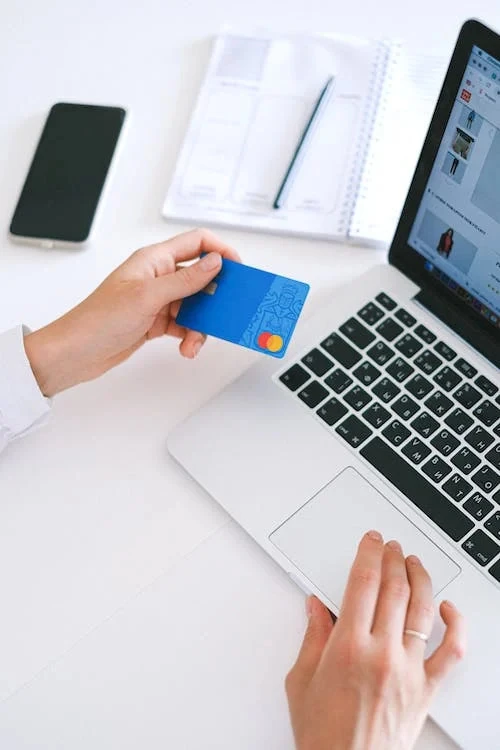
This is how to open a bank account in the Netherlands
Share on social media:
If you fall under the Temporary Protection Directive (RTB), you can open a bank account in the Netherlands. Here you will find information on how to open a Dutch payment account.
Requirements to open a bank account
You can open a bank account by presenting a Ukrainian biometric passport or ID card. It is also possible to open a payment account with a different proof of identity. You can read more about this in the subcategory opening a payment account with a different proof of identity.
With almost all banks, you need a
Payment account for Ukrainians without valid ID
Providers of payment accounts
The following banks offer payment accounts for refugees from Ukraine:
ABN AMRO
Bitsafe: only a Ukrainian ID, passport or driver's licence is required. So you do not need a citizen service number (BSN).
Bunq: your BSN only needs to be provided after opening a bank account. Bunq also has options for Ukrainians to open a payment account with a different ID.
ING
Rabobank (You can also open an account here with a valid or expired passport from another country along with a Ukrainian residence permit that was valid on 24 February 2022)
Regiobank
SNS Bank
Triodos Bank
Transferring money abroad
There are several companies that offer services for transferring money abroad. Two major international companies are Moneygram and Western Union.
Moneygram
Do you need to pay a fee to transfer or deposit money?
If you have a Dutch bank account, there are several ways to deposit money into it. For example, you can transfer money from another bank account. You can also deposit cash at a Geldmaat. Transferring money is usually free. However, your bank may charge a fee for cash deposits. This depends on your bank and the type of bank account you have.
Transfer money to your Dutch bank account
Do you have money in a foreign bank account? If so, you can usually transfer it to your Dutch bank account for free. You can do this through your bank’s app or website. You do not need any cash to do this. At most Dutch banks, there is no charge for a standard transfer in euros.
Depositing cash into your bank account
Do you have cash? If so, you can deposit it into your bank account. This is called making a deposit. You can deposit euro notes at a Geldmaat cash deposit machine. The participating banks are: ABN AMRO, ING, Rabobank, SNS, ASN Bank and RegioBank. Please note: not every Geldmaat location has a cash deposit machine. Therefore, first check
How do I deposit money?
Find a Geldmaat location where you can deposit money.
Use your own debit card and enter your PIN.
Follow the steps on the screen.
Insert your notes into the machine.
Check the amount and confirm the deposit.
You can deposit €5, €10, €20, €50, €100, €200 and €500 notes. You can deposit up to 200 notes at a time. You cannot deposit coins in a standard cash deposit machine.
How much does it cost to deposit money with Geldmaat?
Geldmaat does not charge any fees for using the deposit machine. However, your own bank may charge fees for depositing money. These fees vary by bank.
Why do you sometimes have to pay to deposit money?
Banks incur costs when processing cash. Examples include:
The transport and security of money.
Counting the banknotes.
Maintenance of the cash deposit machines.
Processing the payment.
Some banks pass these fees on to their customers. Other banks do not, or only charge fees if you make frequent deposits.
Can the bank ask where your money comes from?
Yes, that is possible. The bank is allowed to ask where your cash comes from. This happens, for example, if you deposit a large amount or frequently deposit cash. Banks in the Netherlands are required to verify that the money does not come from fraud or criminal activity. This is required by Dutch law. For example, if you have sold something and want to deposit the money, you can show proof of the sale.