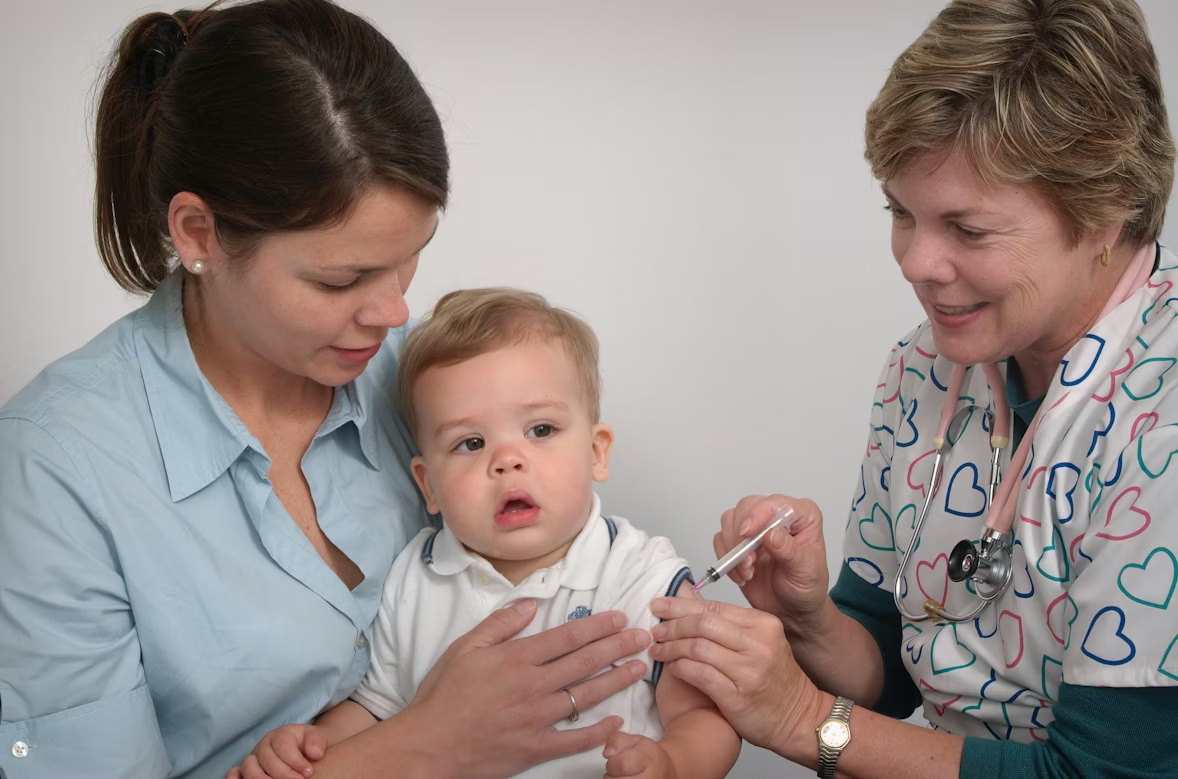
The Dutch vaccination programme for children in the Netherlands
Share on social media:
The Dutch vaccination programme gives children in the Netherlands free and voluntary vaccinations against dangerous diseases. In this article you will read how Dutch vaccinations work, why they are safe and what differences there are compared to vaccinations in Ukraine.
Vaccination programme in the Netherlands
In a
Children in the Netherlands receive invitations for 1 or more vaccinations at set times. They receive the first vaccination when they are a few weeks old. They get the last vaccination when they are 14 years old. Children get most vaccinations, such as
The Dutch government sends out invitations for childhood vaccinations
The
Vaccinations in the Netherlands are free. They are not mandatory.
Vaccinations are given by a youth physician or youth nurse. This is done at the
The RIVM records all vaccinations. So the government knows how many children have been vaccinated. This is important to see how well the Netherlands is protected against diseases.
Are vaccinations dangerous?
In Ukraine, vaccinations are mandatory and not always free. Some people therefore do not trust the Dutch system. Vaccines in the Netherlands are well tested by an independent organisation. So they are safe. The injection may hurt for a while.
Sometimes a child may feel a little sick after an injection. This is normal. The body is then busy providing protection against the disease. A child may have a fever, be tired, want to eat less or have a red and sore spot at the site of the injection. These symptoms usually go away on their own after a few days.
Call the doctor or the healthcare centre if your child is very drowsy, moaning, has a high fever (higher than 39.5°C) or if you are worried.
Differences with vaccinations compared to in Ukraine
In Ukraine, vaccinations are mandatory. Yet fewer people are vaccinated there. In Ukraine, diseases such as
That includes
Ukrainian children also receive all other vaccinations from the Dutch vaccination programme. Just like all other children in the Netherlands.
Why are vaccinations important?
The Dutch vaccination programme has been in existence for 80 years. Almost all people in the Netherlands have been vaccinated. As a result, many dangerous diseases no longer occur here.
Vaccinations are important. They are the only way to prevent diseases from spreading.
Can a daycare facility or school refuse your child if they are not vaccinated?
Schools may not refuse children who are not vaccinated because children must attend school according to compulsory education.
Different rules apply to
3 vaccinations you do not get in Ukraine (but you do in the Netherlands)
In the Netherlands, vaccination begins during pregnancy. When a woman is 22 weeks pregnant, she can get a vaccination against
A vaccination against pneumococcal disease. This helps prevent
. A vaccination against meningococcal disease. This will protect against
and . A vaccination against the Human Papillomavirus (HPV). This virus can later cause
.
These vaccinations are also free and not mandatory because they are part of the Dutch vaccination programme.