You can apply for asylum at an airport or in a port
Share on social media:
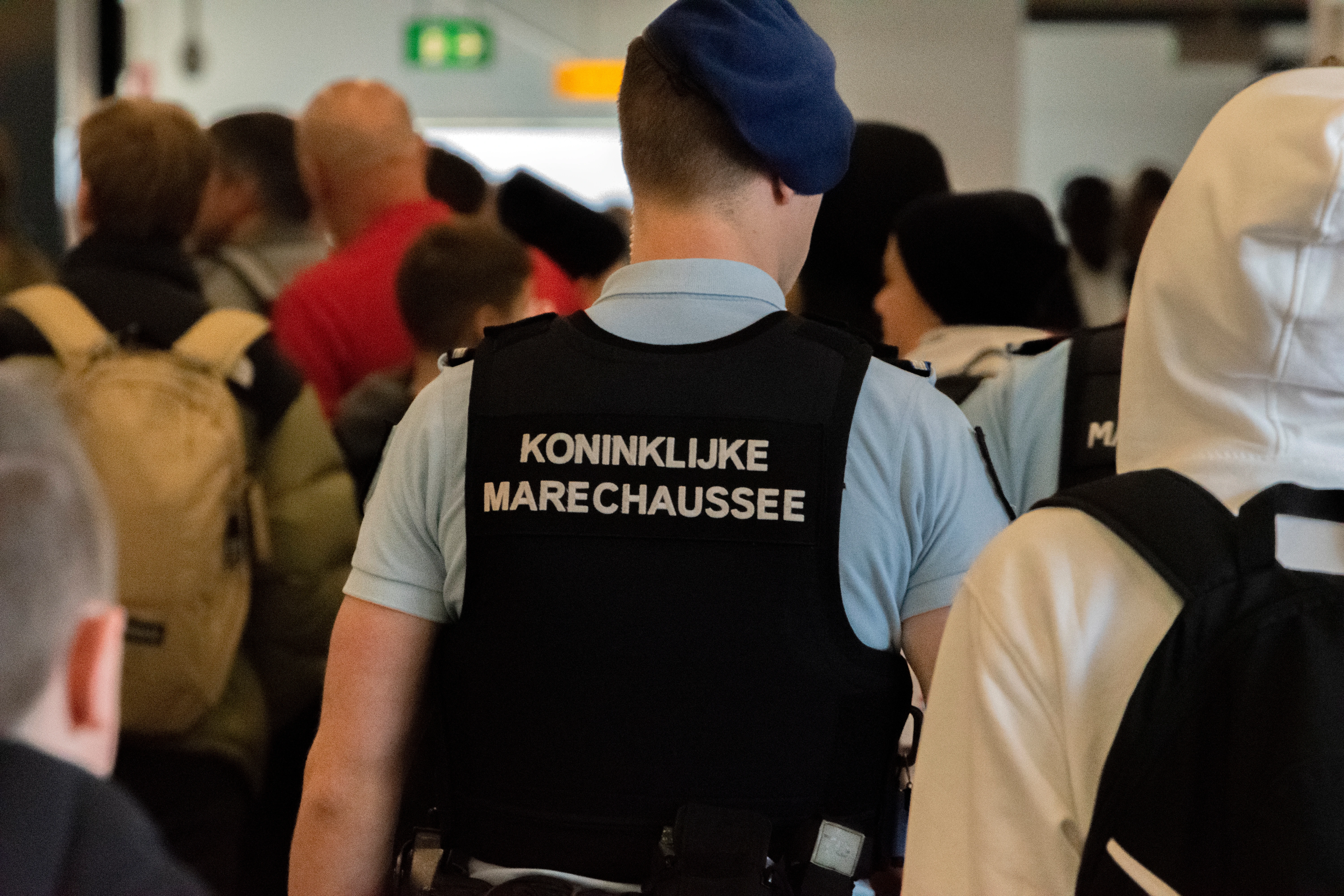
Have you arrived in the Netherlands at Schiphol Airport, another airport or at a port? And do you want to apply for asylum in the Netherlands, but are not allowed to enter the Netherlands? Then report to the Royal Netherlands Marechaussee (KMar) and tell them you want to apply for asylum in the Netherlands.
You report to the Royal Netherlands Marechaussee
The
Once you have reported to the KMar, they will register your asylum application. They will ask you for the following information:
Your name, date of birth and nationality
A photo of yourself
Your fingerprints
The KMar may search your clothes and luggage. This is to verify your identity, to find documents that are important for your asylum application, or for security reasons. Sometimes your documents or belongings may be temporarily held. Always ask why this is happening and ask for written confirmation if the KMar takes any of your documents or belongings. Keep this document safe. You can collect these items later by presenting the document as proof. The contents of your mobile phone, laptop or tablet may not be accessed by the KMar without good reason. If you are asked to hand over your mobile phone, laptop or tablet, ask whether you are obliged to do so. Also ask whether you can speak to your lawyer or VluchtelingenWerk Nederland (VWN) first.
KMar will ask you questions about your travel route. They will also ask whether you have previously applied for asylum in the Netherlands or another European country, and whether you have any family members in the Netherlands.
After the KMar collects all this information from you, you sign your asylum application. This is called the M35H form. Now you have officially applied for asylum in the Netherlands.
You get a special asylum procedure because you apply for asylum at the border of the Netherlands
Once you have registered, the
The border procedure is different from the procedure that applies if you arrive in the Netherlands by land. Are you registering in Ter Apel? If so, the IND will assess whether your application falls under the standard asylum procedure, the
Are you younger than 18 and coming to the Netherlands on your own? Then you will not enter the border procedure. You will also usually not enter this asylum procedure at Schiphol if you came to the Netherlands with your family with children under 18. And you will not enter the border procedure if the IND thinks you are too vulnerable to handle your asylum application in the border procedure. This could be if you have mental problems or have been the victim of (sexual) violence. You will receive the general asylum procedure in these cases and will be taken to the application centre in Ter Apel.
The border procedure is different from the procedure in Ter Apel
During the border procedure, you will usually stay at a closed reception location. At Schiphol, this is usually the Justitieel Complex Schiphol (JCS). You are not allowed to leave this place on your own. This is because you have not yet been granted permission to enter the Netherlands.
The border procedure is faster than the standard asylum procedure. The IND must decide on your asylum application within 5 weeks.
Has the IND rejected your application? Then you have one week to lodge an appeal. The court then has six weeks to reach a decision on your appeal. If you lodge an appeal, the border procedure will therefore take a maximum of 12 weeks.
These deadlines are mandatory. If the IND does not reach a decision within 5 weeks, the border procedure must be stopped. You will then no longer be required to remain at the closed reception location. Your asylum application will be processed further under a different asylum procedure.
The border procedure must also be stopped if the court does not rule on your appeal within 6 weeks.
The border procedure can be completed quickly
The border procedure is quicker than the standard asylum procedure. That is why it is important to pay close attention to the letters you receive and to seek help straight away if there is anything you do not understand.
You will be assigned a lawyer from the start of the asylum procedure. Please discuss any questions you have about your case with your lawyer or with VluchtelingenWerk Nederland (VWN) as soon as possible.